Compliance
Catch shipping bill mismatches before they hold your refund
Check invoice numbers, dates and items on every shipping bill against your own records, before a mismatch stops your money.
Contents
- Your CHA types your invoice details into the shipping bill. Every typing step is a chance for a mismatch.
- A mismatch can hold your IGST refund, change your incentive and raise questions from customs.
- Checking every shipping bill against your own records takes minutes when a system does it.
The document you did not make
You and your team make the invoice and the packing list. The shipping bill is different. Your CHA prepares it, using your documents, and files it with customs. It becomes the official record of your export.
Your refund, your drawback, your RoDTEP and your export proceeds record with the bank all depend on that shipping bill. Yet in most businesses, nobody checks it carefully against the invoice. It arrives as a PDF, someone files it, and the team moves on to the next shipment.
What a mismatch costs
Your IGST refund stops. Customs compares the invoice number and date on the shipping bill with your GST return. If they differ, the refund is held. Even a missing slash is enough.
Your incentives change. Drawback and RoDTEP rates depend on the HS code on the shipping bill. If the CHA used a different code from your invoice, the rate may be lower, or the claim may be questioned.
Your realisation record is wrong. The bank tracks payment against the shipping bill value. If the value or currency is wrong, matching your buyer's payment becomes harder.
Customs asks questions. A description or quantity that does not match your invoice can lead to queries, even after the goods have sailed.
What should be checked
For every shipping bill, compare it with your own records:
- invoice number, exactly, including prefixes and slashes
- invoice date
- each item: description, HS code, quantity and value
- total value and currency
- GSTIN and IEC
None of this is difficult. The problem is doing it for every shipment, every time, when the team is busy with the next one.
Why checking a few is not enough
Many teams check shipping bills only when something goes wrong. By then, the refund has been held for months, and correcting it means paperwork with customs.
Mismatches do not follow a pattern you can predict. They happen when the CHA's operator is new, when an invoice was revised at the last minute, or when a long item list was typed by hand. Checking only some shipping bills means missing exactly the ones that matter.
Making it automatic
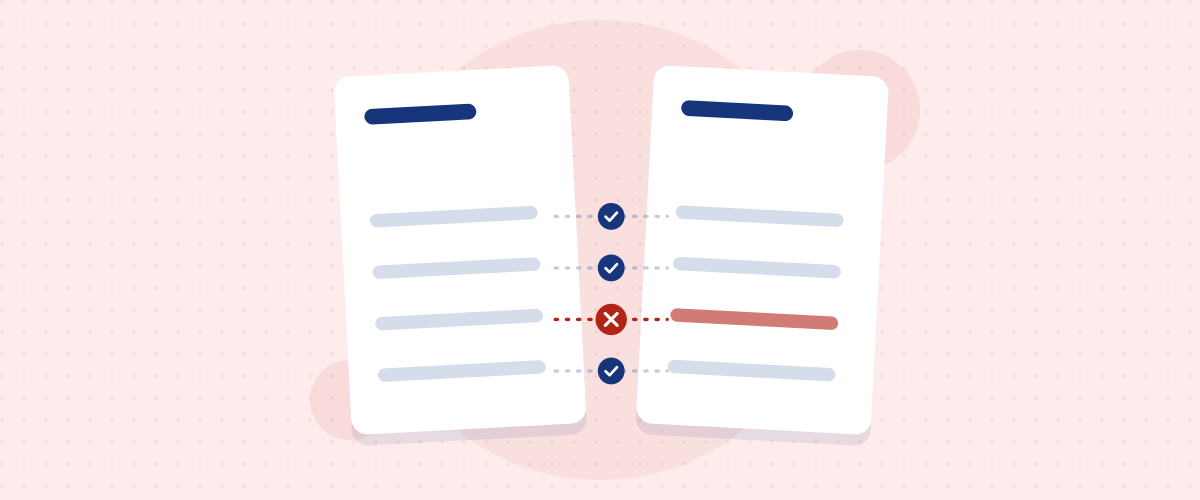
The easiest way is to let your system compare them. When the CHA sends the final shipping bill, upload the file into the system that holds your invoice. The system reads the shipping bill and compares its invoice number, date and items with your records. Anything that does not match is flagged on that shipment.
Your team then has one clear task: call the CHA about the flagged shipment, while correction is still simple.
How Expodite helps. Upload the shipping bill file into Expodite and it checks the invoice numbers, dates and item details against the invoice and items on record. Any mismatch is flagged on the shipment, so your team can correct it with the CHA early.
See shipping bill import and checksQuestions to ask your team and your CHA
- How do we check the CHA's shipping bill today, and who does it?
- How many shipping bills last year had a mismatch with our invoice?
- How many of our pending refunds are held because of a mismatch?
- Does the CHA receive our final invoice, or an earlier draft?
- How quickly does the CHA correct a mismatch when we report one?
Quick answers
- Why does a shipping bill not match my invoice?
- Usually because details were retyped by the CHA, or the invoice was changed after the CHA received it.
- What happens if the invoice number on the shipping bill is wrong?
- The IGST refund can be held, because it no longer matches your GST return. Ask your CHA to correct it through the process customs allows.
This article is general information for Indian exporters. It is not tax or legal advice. Check correction procedures with your CHA and chartered accountant.